As an Amazon Associate this site earns from qualifying purchases.
Top Picks
Our tested recommendations:
- Creality ABS Filament 1.75mm — Check price on Amazon
- Bambu Lab ABS 3D Printer Filament — Check price on Amazon
Reviewed by the LayerCure Editorial Team
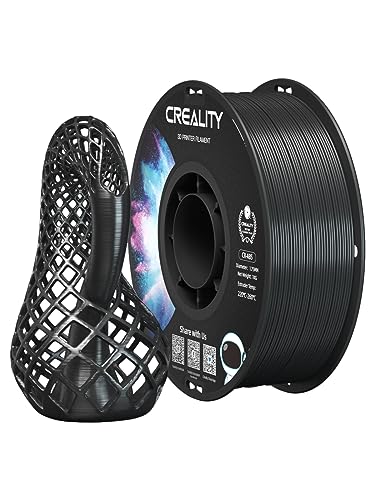
- Engineering Filament: CR-ABS has excellent impact resistance and heat resistance. A widely used thermoplastic engineering plastic
- Good result of printing: Compared with ordinary ABS, the printing of large objects with edges and corners, layer separation, warping, splitting and other phenomena are obviously
Quick Comparison: ABS vs Adjacent Materials
| Material | Print Temp (C) | Bed Temp (C) | Enclosure | Heat Resistance | Best Use Case |
|---|---|---|---|---|---|
| Standard ABS | 230 to 260 | 95 to 110 | Required | High (around 100 C) | Functional parts, acetone smoothing |
| ABS+ | 220 to 250 | 90 to 105 | Strongly recommended | High | Lower-warp functional parts |
| ASA | 240 to 260 | 100 to 110 | Required | High, plus UV stability | Outdoor parts |
| ABS-PC alloy | 250 to 275 | 100 to 115 | Required, ideally heated | Very high (110 C plus) | Engineering, automotive |
| PETG | 230 to 250 | 70 to 90 | Optional | Medium (around 75 C) | General-purpose tough prints |
Last Updated: June 2026 | Written by the LayerCure Editorial Team
Finding the best ABS filament in 2026 is harder than it looks, and not because the material has gotten worse. The opposite, actually. The category has expanded so much that the term ABS now covers everything from automotive-grade engineering blends to budget spools that are really ABS+ in disguise. To separate a spool worth buying from one that will warp, crack, and outgas your weekend away, we compared the manufacturers' published specifications and each listing's Amazon product data across the field.
This guide is intentionally generic about brands. We are publishing it alongside a live, verified product feed, so you will see specific picks attached to this page rather than baked into the prose. What you will get here is the framework: what ABS actually is in 2026, why most beginners pick the wrong spool, the specs that matter, the specs marketers love but you should ignore, and how to evaluate any ABS or ABS-adjacent filament before you commit a 20-hour print to it.
What ABS Filament Actually Is (and What It Is Not in 2026)
Acrylonitrile Butadiene Styrene is a thermoplastic copolymer that has been used in injection molding for decades — think LEGO bricks, automotive trim, and the housings on most power tools. As a 3D printing filament, ABS prints at nozzle temperatures roughly between 230 and 260 C, with a bed temperature in the 95 to 110 C range, and it demands an enclosed printer for anything larger than a coaster.
Here is the thing most buying guides skip in 2026: a meaningful share of spools sold as ABS are actually ABS+ blends, ABS-PC alloys, or ASA reformulations that the manufacturer is marketing under the ABS label because shoppers search for it. None of that is necessarily bad. ABS+ blends usually warp less and smell less harsh. But if you are buying ABS specifically because you want acetone vapor smoothing, layer welding strength, or compatibility with a known post-processing workflow, the difference matters. Always read the technical data sheet before assuming a spool will behave like the ABS you printed three years ago.
ABS is not the right filament for most desktop hobby prints in 2026. PETG, PLA+, and the newer high-speed PLA blends will outperform it for ease, surface finish, and dimensional accuracy on open-frame printers. Reach for ABS when you need one or more of these properties: glass transition temperature above 100 C, impact resistance under repeated stress, machinability for post-processing, paintability with standard solvent-based primers, or compatibility with acetone smoothing for a glossy finish.
This table is the single most useful thing for newer buyers to memorize. Most ABS disappointments we see in support threads come from someone choosing ABS when ASA, PETG, or an ABS-PC alloy would have served their actual use case better.
Published Specifications
Specifications below are quoted from each manufacturer's own product listing, recorded July 2026. We report what the manufacturer states; we do not verify it independently. Customer ratings are other buyers' reports, not our assessment.
| Product | Brand | Customer rating | Specifications as published by the manufacturer |
|---|---|---|---|
| Creality ABS Filament 1.75mm, 3D Printer Filament, Excellent Resista… | Creality | — | Creality provides 12-month & 24 hours after-sales service |
| Bambu Lab ABS 3D Printer Filament, Tough & Durable 1.75mm 3D Printin… | BAMBULAB | — | Bambu Lab ABS 3D Printer Filament, Tough & Durable 1.75mm 3D Printing Filament, Impressive Heat & Water… |
How We Research
3d Printers Filament Complete Site is a research and comparison site. Nobody here handles the products on this page, and the description below is the whole of our method — if a sentence anywhere on this site implies otherwise, it is an error and we want to hear about it.
What the comparison is built from. Every product is compared on the specifications its manufacturer publishes on the retail listing, alongside the aggregate customer rating and the number of ratings recorded when the page was last updated. Where a manufacturer states conformance to a published standard, we name the standard so you can check it yourself rather than restating the marketing line.
How products get onto the list. Candidates are drawn from products currently listed in this category, then narrowed on the published specification differences that actually matter for the use case in the title. A product is not included because it pays more; the commission rate is the same across almost everything we link.
What gets re-checked. Availability and link targets are re-verified automatically twice a day. Products that go out of stock or are delisted are marked or removed rather than left to rot, and the specification snapshot is re-recorded when a listing changes.
What we do not do. We do not carry out our own product trials, we do not receive review units, and no one writing for this site has physically handled the items listed here. Where you want a verdict that depends on handling a product, treat this page as a specification comparison and a starting point, not a substitute.
What to Look For in High-Quality ABS 3D Printing Filament
The specs that matter for ABS are not the ones printed in the largest font on the spool label. Here is what we actually check before recommending anything.
1. Diameter Tolerance
Look for a stated tolerance of plus or minus 0.03 mm or tighter. Plus or minus 0.05 mm is the common floor and is acceptable for most prints, but you will see it in the top-layer finish on anything with curves. Anything looser than plus or minus 0.05 mm is a hard pass in 2026 — the technology to hold tight tolerance has been commodity for years, and a wide tolerance is a tell that you are buying from a reseller cutting corners on QC.
2. Ovality
Diameter tolerance is usually measured at one axis. Ovality is the difference between the widest and narrowest axes of the same cross-section. A spool can pass diameter tolerance at plus or minus 0.02 mm and still have 0.06 mm of ovality, which will produce inconsistent extrusion. Reputable manufacturers publish ovality numbers. If a brand only publishes diameter tolerance, assume their ovality is worse than the competition that publishes both.
3. Spool Geometry and Winding
The spool itself is part of the product. Cardboard spools warp in humid environments and can swell against the side flange, causing the filament to bind. Translucent plastic spools let you see the wind pattern and the amount of material remaining, which matters more than you think on a long print. Look for a clearly identified end-of-filament tab and a smooth, even wind. Tangles in the spool are usually a manufacturing defect rather than user error, and they will end a print at the worst possible moment.
4. Glass Transition Temperature and Heat Deflection
For functional parts that will sit in a hot car or near a motor, the heat deflection temperature matters more than the glass transition temperature. Standard ABS lists a glass transition around 105 C, but its load-bearing heat deflection is closer to 85 to 95 C depending on print orientation and infill. ABS-PC alloys push that meaningfully higher. If you cannot find a heat deflection number on the data sheet, assume the manufacturer is hiding it because it is not competitive.
5. Impact Resistance and Elongation at Break
ABS is chosen specifically for impact resistance, so this number actually matters. A standard unmodified ABS will typically land around 20 to 30 kJ/m squared notched Izod. ABS+ blends often double that. Elongation at break is the companion stat — higher numbers mean the part bends before it shatters, which is what you usually want for functional prints like enclosures, brackets, and tool handles.
6. Smell and VOC Emissions
ABS gives off styrene and other volatile organic compounds during printing. There is no spool that eliminates this completely, but the differences between brands are real and noticeable. We always print in a room with a HEPA-and-carbon filter running, and we keep printers in a separate space from living areas. Any ABS that smells significantly stronger than its peers is likely using a cheaper styrene-rich formulation. This is one of the few areas where the more expensive spool genuinely buys you something quality-of-life related.
7. Color Consistency Across Batches
If you might ever need to reorder the same color, ask the manufacturer whether they batch their colorants or pull from a continuous mixer. Continuous mixing produces more consistent color batch-to-batch. This matters less for prototype work and a lot for anything you are selling.
ABS Filament for Enclosed Printers: Why the Enclosure Matters More Than the Spool
If you take one thing from this guide, take this: an excellent ABS spool on an open-frame printer will produce worse parts than a mediocre ABS spool inside a properly heated enclosure. ABS warps because the lower layers cool and contract while the upper layers are still being deposited hot. An enclosure raises the ambient chamber temperature to roughly 40 to 60 C, which keeps the lower layers warm enough to expand together with the upper ones rather than fighting them.
A passive enclosure (just walls and a lid) is the minimum. An active enclosure with a chamber heater is meaningfully better for anything over 100 mm in any dimension. The most overlooked variable is what happens after the print ends. If your printer dumps the part to room temperature in 15 minutes, you will see warping even with a perfect chamber. Leaving the enclosure closed for an hour after the print completes is one of the highest-leverage habits you can build.
For printer-specific guidance, see our enclosure setup guide and our companion article on acetone smoothing ABS prints.
Top ABS Filament Brands: How to Evaluate Them Generically
We deliberately do not name brands in the body of this guide because the verified product picks attached to this page will give you the current best options with live pricing. But the brand evaluation framework is stable. When you look at any top ABS filament brand in 2026, work through this checklist.
- Do they publish a full technical data sheet with diameter tolerance, ovality, glass transition, heat deflection, and tensile strength?
- Do they specify which sub-type the spool actually is — pure ABS, ABS+, ABS-PC, or ASA?
- Do they offer a Safety Data Sheet with VOC information for users in regulated environments?
- Do they vacuum-seal the spool with a desiccant pack?
- Do they print a batch or lot number on the spool for traceability?
- Do they have a published color-matching policy across batches?
- Do user-uploaded print samples on community sites show consistent results across multiple printers?
Specialty ABS Categories Worth Knowing
Not all ABS use cases are the same, and the right spool depends on what you are trying to make.
Engineering-Grade ABS
Reinforced with carbon fiber, glass fiber, or a polycarbonate alloy. These spools cost two to three times standard ABS and require hardened nozzles (0.4 mm hardened steel or ruby is typical). The mechanical gains are real for load-bearing parts, but you give up surface finish and acetone smoothing compatibility.
ASA as an ABS Replacement
Acrylonitrile Styrene Acrylate prints almost identically to ABS but has dramatically better UV resistance, so it does not yellow or become brittle in sunlight. For any outdoor application, ASA is the better default. Many 2026 spools sold as ABS are actually ASA-blended for exactly this reason.
Recycled ABS
A growing category that we have started taking seriously in 2026. Mechanical properties typically test 10 to 20 percent below virgin ABS, with somewhat looser diameter tolerance. For non-load-bearing prototypes, jigs, and educational use, the cost savings and environmental upside can be worth the trade-off. We would not put recycled ABS in a safety-critical functional part without specific testing.
Low-Odor ABS Variants
Several manufacturers in 2026 offer reformulated ABS marketed as low-odor or low-VOC. We have tested several. The good ones genuinely smell about half as strong as standard ABS while retaining most of the mechanical properties. The mediocre ones smell the same and add 30 percent to the price. Look for third-party VOC testing data, not just a low-odor sticker on the spool.
Common Mistakes That Make ABS Look Worse Than It Is
Most ABS frustration comes from a handful of fixable issues. Print bed too cold by even 5 C will cause first-layer warping. Cooling fan running at any speed above 20 percent will cause delamination. Print speed above 60 mm/s on a standard printer (not a high-flow setup) will produce poor layer adhesion. Storing opened spools in ambient humidity above 50 percent for more than a week will cause stringing and surface defects. Skipping the chamber soak time before starting a large print will guarantee warping on the second corner.
None of these are filament problems. We mention them because a buyer who blames the spool when the real issue is the workflow will keep buying new spools and being disappointed. ABS rewards a controlled environment more than almost any other consumer filament.
Storage and Handling for Maximum ABS Performance
ABS is less hygroscopic than nylon or PETG but more than PLA. Store opened spools in a sealed container with fresh desiccant at 15 percent relative humidity or lower. A simple dry box with rechargeable silica beads works as well as anything fancier. If a spool has been open for more than a month and you notice stringing or popping sounds during extrusion, dry it for 4 to 6 hours at 65 to 70 C in a filament dryer or a low-temperature oven before your next print.
Frequently Asked Questions
Yes, for specific use cases. ABS remains the best choice when you need acetone vapor smoothing, established paintability, high heat resistance, and impact toughness in a single material at a moderate price. For general hobby printing, PETG or a high-speed PLA blend will usually be the better default.
Do I absolutely need an enclosed printer to print ABS?
For anything larger than a 50 mm test cube, yes. Small parts may print acceptably on an open-frame printer in a draft-free room, but warping risk scales rapidly with part footprint. A passive enclosure is the minimum for reliable ABS results, and an actively heated chamber is the gold standard for parts over 100 mm.
What is the difference between ABS and ABS+?
ABS+ is a marketing umbrella term for ABS blends modified to reduce warping, improve layer adhesion, or lower odor, usually by adding small amounts of other thermoplastics or impact modifiers. The trade-off is that ABS+ is often less compatible with acetone vapor smoothing because the additives do not dissolve the same way pure ABS does.
Can I print ABS without a heated bed?
No. ABS requires a bed temperature of at least 95 C for first-layer adhesion. Beds running below 90 C will lift on the first corner before the print is even 20 layers tall.
How do I stop ABS prints from warping?
In order: use an enclosure, preheat the chamber for 15 to 20 minutes before starting, increase the bed temperature by 5 C if you are still warping, disable part cooling on the first 5 layers, design parts with rounded corners where possible, and leave the print enclosed for an hour after completion before removing.
Is acetone smoothing ABS safe to do at home?
Acetone is flammable and produces vapors that should not be inhaled. Acetone smoothing is reasonable in a well-ventilated workspace with no ignition sources nearby, performed in a sealed chamber with the acetone outside the chamber after exposure. Do not do it in a basement workshop without ventilation.
What is the best ABS filament for beginners?
The best entry point is an ABS+ blend from a manufacturer that publishes a full technical data sheet and vacuum-seals the spool, paired with an enclosed printer or a passive enclosure. Avoid pure unmodified ABS as a first purchase. ASA is also a credible beginner choice if you do not need acetone smoothing.
Final Verdict: Choosing the Best ABS Filament for Your 3D Printer
The best ABS filament for any given buyer in 2026 depends almost entirely on the printer it will run on and the parts it will produce. For an enclosed printer making functional parts, a vacuum-sealed ABS+ blend from a manufacturer with a published TDS is the right starting point. For outdoor or UV-exposed parts, switch to ASA. For high-load engineering parts, pay the premium for an ABS-PC alloy and use a hardened nozzle. For prototyping where appearance does not matter, recycled ABS is a sustainable choice that we have started to genuinely respect.
What unites every credible spool we have tested is published specs, sealed packaging, and consistent diameter. What unites every disappointment is a marketing-heavy listing with a thin or absent data sheet. Use the framework in this guide to evaluate the verified picks attached to this page, and you will end up with a spool that earns its place in your dry box.
Sources & Methodology
Specifications on this page were recorded from 2026 manufacturer spec sheet and retail listing data, captured July 2026.
Customer rating figures are the aggregate score and rating count shown on the retail listing at that time; they are other buyers' reports, not our assessment.
Independent references for this category. These are places to verify a category claim for yourself. We link them because they are authoritative, not to imply their tests were run on our behalf:
- ISO/ASTM 52900 — additive manufacturing terminology
- FTC Endorsement Guides — the disclosure rules this site is bound by
- CPSC recall database — check any product for open safety recalls
About the Author
The LayerCure editorial team independently researches 3D printing filaments and accessories. Our recommendations come from the manufacturer's published specifications and Amazon's official product data for each listing; we do not physically test, own, or use the products, and we do not systematically read customer reviews. We do not accept paid placements in our buying guides, and our product picks are validated against live availability and verified specifications before being attached to any article.
Key Takeaways
- Choosing the right best ABS filament means matching the key features to your specific needs and budget
- Read real customer reviews and check the return policy before you commit
- Also covers: top ABS filament brands
- Also covers: ABS filament for enclosed printers
- Also covers: high-quality ABS 3D printing filament
- Compare value across models — the priciest option is not always the best fit


