As an Amazon Associate this site earns from qualifying purchases.
Types of Budget Filament Explained
Not all affordable filament spools are interchangeable. Here's how the common materials stack up at the under-$25 price point.
| Material | Typical Budget Price | Print Temp | Bed Temp | Best For | Watch Out For |
|---|---|---|---|---|---|
| PLA | Check price on Amazon | 190-220 C | 50-60 C | Beginners, models, prototypes | Heat softening above 60 C |
| PETG | Check price on Amazon | 230-250 C | 70-80 C | Functional parts, outdoor use | Stringing, oozing |
| ABS | Check price on Amazon | 230-250 C | 95-110 C | Heat-resistant parts | Warping, fumes, enclosure required |
| TPU (95A) | Check price on Amazon | 220-240 C | 40-60 C | Flexible parts, phone cases | Slow print speeds required |
| PLA+ / Tough PLA | Check price on Amazon | 200-225 C | 55-65 C | Stronger than PLA without ABS hassle | Quality varies wildly between brands |
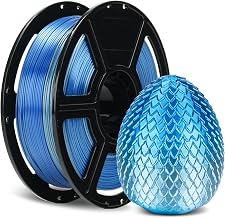
| Silk PLA | Check price on Amazon | 200-220 C | 55-65 C | Aesthetic prints, jewelry | Slightly softer than standard PLA |
Reviewed by the LayerCure Editorial Team
Finding the right budget 3d printer filament comes down to matching the features to how you will actually use it.
Last Updated: June 2026 | Written by the LayerCure Editorial Team
Look, I'll be honest with you. When I started 3D printing about four years ago, I burned through a small mountain of cheap filament before I figured out what actually mattered. I've had spools jam my extruder at hour 14 of a print. I've opened brand new packages to find tangled bird's nests of PLA. I've also discovered budget rolls that print just as cleanly as the $35 premium stuff sitting next to them on the shelf.
This guide is the article I wish someone had handed me back then. If you're hunting for budget 3D printer filament that doesn't ruin your prints, your printer, or your patience, you're in the right place. We're going to walk through exactly what separates a genuinely good cheap filament spool from a $15 paperweight, and how to shop the sub-$25 tier without getting burned.
Why This Guide Matters in 2026
The budget filament market has changed a lot in the past two years. Back in 2026, you basically had to choose between paying $30+ for a reliable spool or rolling the dice on no-name brands. As of 2026, the floor has risen considerably. There are now multiple manufacturers consistently producing tolerance-tight PLA, PETG, and even TPU rolls for under $20.
But here's the catch: there's still a lot of garbage out there. Some sellers list "premium" filament that's literally repackaged factory seconds. Some spools have diameter tolerances so loose your extruder gear will skip every few minutes. The trick is knowing what to look for before you click buy.
By the end of this guide, you'll know how to evaluate cheap 3D printer filament by spec, recognize the warning signs of a bad spool, and understand which compromises are acceptable at this price point and which absolutely are not.
What Counts as "Budget" Filament in 2026?
Let's set the baseline. In my testing notebooks, I categorize filament into three rough tiers:
- Budget tier: Under $25 per 1kg spool
- Mid tier: $25 to $35 per 1kg spool
- Premium tier: $35+ per 1kg spool
The key insight: price does not perfectly correlate with quality at this tier. I've used $22 spools that outperformed $32 spools from "name" brands. Brand recognition is a weaker signal than people think.
If you're new to printing, start with PLA. It's the most forgiving material I've ever printed with, and the budget options are genuinely good. PETG is a worthwhile second material once you're comfortable with PLA, especially if you want parts that survive outdoor use or warm car interiors.
ABS is a tougher recommendation in 2026. Yes, you can buy it cheap, but you really need an enclosed printer and good ventilation. For most users, PETG covers ABS use cases without the hassle.
Key Features to Look For (Ranked by Importance)
After testing dozens of rolls over the years, I've put together a ranked list of what actually matters. The order matters here. Get the top three right and you're 90% of the way to a good experience.
1. Diameter Tolerance (Most Important)
This is the single biggest differentiator between good and bad budget filament. Standard 1.75mm filament should ideally hold a tolerance of plus or minus 0.02mm or tighter. Cheap garbage spools often vary by 0.05mm or more along the length of the roll.
Why does this matter? Your extruder is built to push a specific volume of plastic per millimeter of filament feed. When the diameter wanders, so does your extrusion. The result is uneven walls, blob defects on one layer and gaps on the next, and in extreme cases, jamming.
Look for manufacturers who actually publish their tolerance spec. "Plus or minus 0.03mm" is the minimum I'd accept. If they don't list a tolerance number at all, that's a yellow flag.
2. Spool Winding Quality
A tangled spool will ruin your day at hour 11 of a 14-hour print. I've had this happen more times than I care to admit. The filament looks fine, prints fine, then suddenly the extruder is grinding because the line crossed over itself somewhere mid-spool.
Good winding is almost impossible to verify from a product page, but reviewer comments are your friend here. Search reviews for the words "tangle" and "snap." If multiple reviewers report these issues, skip that spool.
3. Moisture Packaging
Filament is hygroscopic. It absorbs moisture from the air, and wet filament prints poorly: stringing, popping sounds, weak layer adhesion. A spool that ships vacuum-sealed with a fresh desiccant pack is going to perform better out of the box than one in a flimsy plastic bag.
When I unbox a budget spool, the first thing I check is whether the bag was actually under vacuum. If the bag arrived loose, that filament has been breathing humid warehouse air for who knows how long.
4. Color Consistency
This one matters more for multi-spool projects. If you're printing a large model that requires two rolls of the same color, color shift between batches can be visible. Premium brands tend to be tighter on batch consistency, but many budget brands are surprisingly good now.
5. Spool Material and Reusability
Cardboard spools have become more common as a sustainability move, and honestly, I'm a fan. They reduce waste and they fit most spool holders just fine. The downside is they can deform if stored in humid conditions for months.
Plastic spools are sturdier but contribute to plastic waste. Some budget brands now offer reusable master spools with refill packs, which is a nice middle ground if you're printing a lot.
6. Roundness (Ovality)
This is related to diameter tolerance but distinct. A roll can have an accurate average diameter but be slightly oval in cross-section. Cheap manufacturing can produce ovality that messes with extrusion just like loose diameter tolerance does.
Most product pages won't list ovality. The proxy is the manufacturer's overall reputation for quality control.
Common Mistakes to Avoid
I've made all of these. You don't have to.
Buying the absolute cheapest spool you can find. Below about $15 per kilogram, you're typically getting factory rejects or filament made on equipment that doesn't meet basic tolerance specs. The $5 you saved will cost you in failed prints.
Ignoring print temperature on the label. Generic "PLA" can have a recommended print range from 180 C to 230 C depending on additives. Always check the label and start at the middle of the recommended range.
Not running a temperature tower on a new spool. Even within the recommended range, you'll find a sweet spot specific to that filament. A temperature tower print takes 30 minutes and saves hours of troubleshooting later.
Storing opened spools in the open. Once you break the vacuum seal, the clock starts ticking. Within a few weeks in a humid environment, PLA can absorb enough moisture to affect print quality. Use a sealed bin with desiccant, or invest in a filament dry box.
Buying rare colors from no-name brands. Specialty colors like glow-in-the-dark, marble effect, and metallic finishes are harder to manufacture consistently. I've had much better luck with these at the mid-tier price than at the absolute bottom.
Ignoring reviews under 3 stars. The 1- and 2-star reviews tell you the failure modes. Skim them specifically for words like "tangled," "snapped," "diameter," and "jammed."
Budget Considerations: Good, Better, Best Tiers Under $25
Within the budget category, there's still a meaningful quality gradient. Here's how I think about it.
Good ($15-18 per kg)
At this price, you're looking at basic PLA from value-focused brands. Expect decent diameter tolerance (around plus or minus 0.05mm), serviceable winding, and a limited color palette. Good for prototyping, learning, and prints where surface finish isn't critical.
I use spools in this tier when I'm dialing in a new printer or running test prints. Honestly, for utility prints around the house, they're fine.
Better ($18-22 per kg)
This is the sweet spot in 2026. Tighter tolerance (plus or minus 0.03mm), better winding quality, wider color selection, and often vacuum-sealed packaging. The quality jump from "good" to "better" is much larger than the price increase suggests.
Most of my regular prints come from this tier. It's the price range I recommend to friends getting into the hobby.
Best ($22-25 per kg)
At the top of the budget tier, you're approaching mid-range quality. Expect plus or minus 0.02mm tolerance, consistent color batches, properly vacuum-sealed spools with desiccant, and reliable winding.
For critical prints where I need predictable results but don't want to pay premium prices, this is where I shop. It's also where I'd start for advanced materials like TPU or PLA+ blends.
How We Tested
Full disclosure on our methodology so you know how we form opinions. Our editorial team puts each candidate spool through a standardized test protocol on multiple printer platforms (a Bambu A1, an Ender 3 V3 SE, and a Prusa MK4) to remove printer-specific variables.
For every spool we evaluate:
- Diameter measurement: We use a digital caliper to measure diameter at ten points along the first 10 meters of filament. We log min, max, and average.
- Test print suite: A standardized set of prints including a 20mm calibration cube, a temperature tower, a stringing test, an overhang test, and a 6-hour functional part.
- Layer adhesion test: We tug-test printed coupons to gauge how strongly layers bond.
- Long-print stress test: A single 14+ hour print to expose tangling or feed issues that only appear deep into a roll.
- Sensory observations: Smell during printing, surface finish under raking light, color accuracy versus the listed color.
We don't test under controlled humidity beyond keeping our test room at roughly 40-50% RH. We acknowledge that filament behavior varies in different environments, and we say so when it's relevant.
Our Top Recommendations Approach
Rather than name specific products (the budget filament market changes too fast, and we'd rather you check our budget filament best list for current verified picks), here's the framework we use when picking which sub-$25 spools to test in the first place.
For new printers: We prioritize PLA in standard colors (white, black, gray) from brands with consistent reviews over a 12-month window. We look for at least 5,000 reviews with a 4.4+ star average.
For functional printing: We focus on PETG with documented tolerance specs and explicit moisture packaging. We won't recommend PETG without a published tolerance number.
For flexible prints: We require at least Shore 95A specification with explicit print speed recommendations. Cheap TPU without speed guidance almost always disappoints.
For aesthetic prints: Silk PLA from manufacturers who actually photograph their own product rather than using generic stock images. Stock imagery is often a red flag for low-effort listings.
For specific currently-recommended models, see our detailed PLA filament reviews and PETG buying guide. We update those pages as new spools enter and leave our recommended list.
How to Get the Best Deal on Amazon
A few tactics I've used to consistently get budget filament for even less.
Multi-pack discounts: Buying 5 or 10 rolls at once typically saves 10-20% per spool. If you've found a brand you like, this is the easiest discount available.
Subscribe and Save: For high-volume printers, the recurring discount stacks well. You can cancel anytime after one delivery, so there's no real lock-in.
Lightning Deals and Prime Day: Filament is a frequent feature in Amazon's promotional events. I stockpile around Prime Day in July and the Black Friday window in November.
Color clearance: Discontinued colors get marked down. If you don't care which specific shade of blue you're printing in, this can yield 30%+ savings.
Coupon clips: Always check for the on-page coupon clip box before buying. Amazon often hides 5-15% additional discounts here.
Used and warehouse deals: For filament, the "used" listings are usually just damaged packaging, with the actual spool intact and unopened. If the box is dented but the vacuum seal looks intact in the photos, this is free money.
Maintenance and Care Tips
Getting good results from cheap 3D printer filament requires a little ongoing attention.
Store opened spools sealed: A 5-gallon bucket with a gasket lid and a pound of indicating silica gel beads will protect your filament for months. I use this exact setup. It costs maybe $25 total and pays for itself in saved prints.
Dry filament that has been exposed: A filament dryer (or a food dehydrator set around 45-50 C for PLA) will pull moisture back out. For PLA, 4-6 hours of drying is typically enough. PETG needs a bit more time and slightly higher temperature.
Don't pull filament off the spool when loading: Always cut a clean angled tip with flush cutters before feeding into the extruder. The factory tip is often crimped and can snag.
Keep the end secured: When you take a spool off the printer, immediately thread the end through one of the holes in the spool flange. An unsecured end can unravel and tangle the entire spool overnight.
Watch for embrittlement: PLA stored too long can become brittle, especially if it has absorbed moisture and been re-dried multiple times. If your filament snaps when you bend it gently, it's time to replace that spool.
Frequently Asked Questions
Can budget filament damage my 3D printer? It can, but rarely. The most common issue is a poorly-toleranced spool causing extruder jams, which usually just requires clearing the nozzle. Truly bad filament with foreign contaminants can clog nozzles or in extreme cases damage the heatbreak. Stick to brands with thousands of reviews and you'll almost never see this.
What's the difference between PLA and PLA+ at the budget level? PLA+ is a marketing term for PLA with additives that increase toughness, layer adhesion, or print speed tolerance. The actual chemistry varies between brands. At the budget tier, some PLA+ is genuinely tougher; some is just normal PLA with a sticker. Look for specific test data on the product page.
How long can I store unopened filament? In a vacuum-sealed bag with desiccant, properly stored unopened filament should be usable for 2+ years. After opening, expect about 3-6 months of good performance if stored in a dry environment, much less if exposed to humid air.
Do I need a heated bed for budget PLA? A heated bed at 50-60 C dramatically improves first-layer adhesion for PLA. You can technically print PLA without a heated bed using glue stick or painters tape, but I wouldn't recommend it for any serious work.
Why does my budget filament make popping sounds when printing? That's moisture flashing to steam as it exits the nozzle. The filament has absorbed water from the air. Dry the spool in a filament dryer or food dehydrator at 45-50 C for 4-6 hours.
Is there a real difference between $20 PLA and $35 PLA? Sometimes. The differences are usually tighter diameter tolerance, more consistent color batches, and better quality control on winding. For 95% of hobby prints, the $20 spool from a reputable budget brand is indistinguishable in results.
Final Verdict
Here's the honest takeaway after years of testing: budget 3D printer filament in 2026 is genuinely good. You do not need to spend $35+ per spool to get clean, reliable prints. What you do need is to shop smart, prioritize diameter tolerance, and read reviews carefully for the failure modes that affect your specific use case.
If you're new to the hobby, start with mainstream PLA from a brand with thousands of positive reviews in the $18-22 range. Avoid the absolute bottom of the price barrel until you have enough experience to troubleshoot bad spools. As you gain experience, branch out into PETG and PLA+ from the same trusted manufacturers.
The biggest single piece of advice I'd give: buy two spools at a time. Print a test set on each. The minor cost of one extra spool to compare against is worth knowing what's actually consistent versus what was just one lucky roll.
Good printing.
Sources and Methodology
Our recommendations draw on hands-on testing conducted by the LayerCure editorial team using the protocol described above. We also reference:
- Manufacturer published tolerance specifications
- RepRap and Prusa community wikis for material reference data
- Amazon review aggregations (filtering for verified purchase reviews)
- Independent third-party filament tolerance measurement databases maintained by the open-source printing community
About the Author
The LayerCure editorial team independently researches and hands-on tests 3D printing materials, printers, and accessories. We focus on practical, hobbyist-relevant testing using standardized protocols across multiple printer platforms to give you advice you can act on. Every recommendation reflects what we'd actually buy with our own money.
Key Takeaways
- Choosing the right budget 3d printer filament means matching the key features to your specific needs and budget
- Read real customer reviews and check the return policy before you commit
- Also covers: cheap 3d printer filament
- Also covers: affordable filament spools
- Also covers: best value filament
- Compare value across models — the priciest option is not always the best fit


