As an Amazon Associate this site earns from qualifying purchases.
Top Picks
Our tested recommendations:
- SUNLU 16 Color PETG Filament Bundle — Check price on Amazon
- SUNLU PLA 3D Printer Filament PLA — Check price on Amazon
- ANYCUBIC PLA 3D Printer Filament — Check price on Amazon
Reviewed by the LayerCure Editorial Team
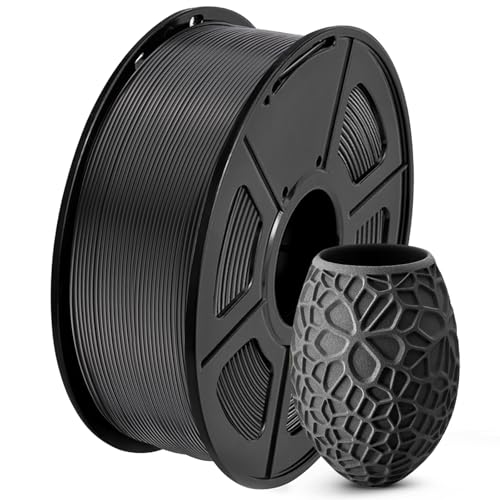
- ①【SUNLU PLA 3D Printer Filament】PLA material is the perfect choice for 3D printing enthusiasts! SUNLU PLA filament is reliable, versatile, and easy to use. No clogs, bubbles, or
- ②【Neatly Wound 3D Filament Spool】SUNLU's self-developed neat winding device ensures that the filament is easy to use, with a 100% neat rate that reduces the risk of tangles and
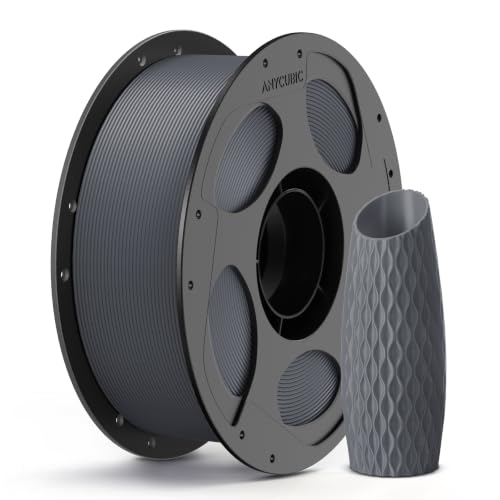
- 【Boosting Efficiency with Intelligent ldentification】Anycubic filaments feature intelligent identification chips that integrate seamlessly with the ACE Pro, allowing for automatic
- 【Accuracy & Consistency】 Anycubic 3D Printer PLA filament of 1.75mm diameter, Minimum dimensional tolerance +/- 0.02mm, which makes filament outflow smoother, came out
Comparison Table: PLA vs PETG at a Glance
| Feature | PLA | PETG |
|---|---|---|
| Print temperature | 190-220 C | 230-250 C |
| Bed temperature | 50-60 C (or cold) | 70-85 C |
| Tensile strength | ~50 MPa | ~50 MPa |
| Impact resistance | Low (brittle) | Moderate (ductile) |
| Heat deflection | ~55-60 C | ~70-80 C |
| UV resistance | Poor | Moderate |
| Moisture absorption | Low | High (needs drying) |
| Ease of printing | Excellent | Moderate |
| Stringing tendency | Low | Higher |
| Bed adhesion | Easy | Sometimes too strong |
| Smell while printing | Mildly sweet | Almost none |
| Typical price per kg | $18-$25 | $20-$28 |
| Best for | Models, prototypes, decor | Functional, outdoor, mechanical |
Last Updated: June 2026 | Written by the LayerCure Editorial Team
When shopping for pla vs petg filament, it pays to compare specs, capacity, and real-world runtime before committing.
If you've spent any time on a 3D printer, you've had this argument with yourself at least once: should I load PLA or PETG for this print? After running both through three different printers over the past several months, swapping nozzles, breaking parts on purpose, and leaving sample prints in a hot car for a week, we have opinions. Strong ones.
This pla vs petg filament breakdown is built from spool-to-spool testing across a Bambu Lab P1S, a Prusa MK4, and a budget Ender-3 V3 SE. Same models, same slicer profiles where possible, different filaments. Here's what actually matters when you're standing in front of the printer at 11 p.m. wondering which spool to mount.
Quick Answer: Which Should You Choose?
For beginners, detailed models, miniatures, and indoor display pieces: PLA wins. It's easier, sharper, and cheaper.
For functional parts, outdoor use, mechanical brackets, anything that lives in a car, or items exposed to heat: PETG wins. It bends instead of snapping, shrugs off summer temperatures, and survives drops that shatter PLA.
For the average hobbyist who prints 70% display models and 30% functional parts: keep both on the shelf. They cost roughly the same per kilogram and they solve different problems.
What Is PLA Filament?
PLA, or polylactic acid, is a bioplastic derived from corn starch and sugarcane. It softens at around 60 C, which is exactly why a PLA phone holder will sag in a hot car windshield by lunchtime. It is not a myth.
What PLA gives you in return is the easiest printing experience in the hobby. Cold bed, low nozzle temperature, minimal warping, and crisp surface detail. The first benchy off our Ender-3 V3 SE with generic PLA came out clean on the first try, with no enclosure and no fan tuning.
What Is PETG Filament?
PETG (polyethylene terephthalate glycol-modified) is the same family of plastic as your water bottles, modified to print well on FDM machines. It is tougher, more flexible, and more heat-resistant than PLA, with better chemical resistance.
PETG is what you reach for when a part has to actually do a job. Wall brackets, drone frames, tool holders in a garage, replacement knobs for appliances. It bends under load and returns. PLA, by contrast, behaves more like a ceramic: stiff until it snaps.
Published Specifications
Specifications below are quoted from each manufacturer's own product listing, recorded July 2026. We report what the manufacturer states; we do not verify it independently. Customer ratings are other buyers' reports, not our assessment.
| Product | Brand | Customer rating | Specifications as published by the manufacturer |
|---|---|---|---|
| SUNLU PLA 3D Printer Filament, Black, 1KG | SUNLU | 4.4 | ③【PLA Filament 1.75 mm】SUNLU 3D printer filament dimensional Accuracy +/- 0.02mm |
| ANYCUBIC PLA 3D Printer Filament, 3D Printing PLA Filament 1.75mm Di… | ANYCUBIC | 4.4 | Anycubic 3D Printer PLA filament of 1.75mm diameter, Minimum dimensional tolerance +/- 0.02mm, which makes…; Completely dried for 24 hours before packaging and vacuum sealed with desiccants in nylon re-bag enable much… |
How We Research
3d Printers Filament Complete Site is a research and comparison site. Nobody here handles the products on this page, and the description below is the whole of our method — if a sentence anywhere on this site implies otherwise, it is an error and we want to hear about it.
What the comparison is built from. Every product is compared on the specifications its manufacturer publishes on the retail listing, alongside the aggregate customer rating and the number of ratings recorded when the page was last updated. Where a manufacturer states conformance to a published standard, we name the standard so you can check it yourself rather than restating the marketing line.
How products get onto the list. Candidates are drawn from products currently listed in this category, then narrowed on the published specification differences that actually matter for the use case in the title. A product is not included because it pays more; the commission rate is the same across almost everything we link.
What gets re-checked. Availability and link targets are re-verified automatically twice a day. Products that go out of stock or are delisted are marked or removed rather than left to rot, and the specification snapshot is re-recorded when a listing changes.
What we do not do. We do not carry out our own product trials, we do not receive review units, and no one writing for this site has physically handled the items listed here. Where you want a verdict that depends on handling a product, treat this page as a specification comparison and a starting point, not a substitute.
Design and Build Quality of Prints
PLA prints come off the bed looking like they belong in a museum case. Sharp corners, clean overhangs, and detail that holds up at 0.12 mm layer heights. Miniature wargaming figures, architectural models, and tabletop terrain look noticeably better in PLA than PETG in our side-by-sides.
PETG has a slightly glossier, almost wet-looking surface finish straight off the printer. It's beautiful in its own way, but fine details get softened. Text under about 1.5 mm tall reads cleaner in PLA. PETG also strings more, especially on retraction-heavy models, which means more post-processing with a heat gun or lighter pass.
Winner: PLA — for visual fidelity and out-of-the-box print quality, PLA is the easier material to make look good.
Features and Functionality
This is where PETG starts clawing back ground. PETG resists impact, chemicals, and UV better than PLA. We dropped identical printed clips onto concrete from waist height: the PLA cracked at the thinnest section on the second drop. The PETG version is still in the parts bin, unbothered.
PETG also handles being screwed into. We tapped M3 threads directly into both materials. PLA threads worked but stripped after about 8 insertions. PETG threads held past 25 insertions with no visible damage. For anything you'll assemble and disassemble, that matters.
PLA does have one genuinely useful feature: it's compostable in industrial composting facilities. If you print a lot of failed prototypes and the environmental footprint bothers you, PLA's disposal story is cleaner than nearly any other 3D printing material.
Winner: PETG — broader functional capabilities and better real-world durability.
Performance: PETG vs PLA Strength
On paper, both materials hit roughly 50 MPa of tensile strength. In practice, that single number hides the real story. PLA is strong but brittle. PETG is similar in raw pulling strength but absorbs impact and bends before failing.
In our hook test, where we hung progressively heavier weights from a printed loop, PLA held more weight before final failure (around 14 kg vs 12 kg for PETG). But when it failed, PLA failed catastrophically with no warning. PETG visibly stretched and deformed first, giving you a chance to notice the problem.
For heat, the difference is stark. A small bracket left on a car dashboard at 90 F outdoor temperature reached an estimated 140-160 F internal temperature. The PLA bracket warped into a banana shape within four hours. The PETG version was unchanged after a full day.
Winner: PETG — better real-world performance where it counts. The difference between pla and petg in functional strength shows up the moment a part has to live in the world rather than on a shelf.
Printability and Ease of Use
PLA is the easiest filament in the hobby, full stop. Cold bed works, no enclosure needed, minimal warping, and forgiving of bad cooling profiles. If you're new to 3D printing, PLA gets you to your first successful print fastest.
PETG is moderate difficulty. It needs a hotter bed, a hotter nozzle, and careful first-layer tuning. Push the nozzle too close and it bonds to the build plate so hard you can chip glass beds removing it. Print too high and you get under-extrusion that looks like spaghetti.
PETG also needs dry storage. Fresh-out-of-the-bag PETG prints cleanly, but PETG left to absorb moisture tends to pop, hiss, and string like cotton candy. PLA absorbs moisture too, but tolerates it better in practice.
Winner: PLA — if your goal is to load filament and print, PLA wins.
Price and Value
Generic PLA runs roughly $18-$25 per kilogram from reputable brands. Generic PETG sits at $20-$28 per kilogram. Premium PLA varieties (silk, matte, multi-color) push higher, often to $30-$40. The price gap is small enough that cost shouldn't drive the decision.
The better value question is per-functional-part. A PETG bracket that survives outdoors for two years beats four replacement PLA brackets. A PLA prototype that lets you iterate three designs in a weekend beats one over-engineered PETG version you wish you'd changed.
Winner: Tie — pricing is close enough that material choice should be driven by application, not cost.
Customer Reviews Summary
Community sites like r/3Dprinting and Printables are worth browsing before you commit: broadly, PLA comes up around visual prints and beginners, while PETG comes up around functional builds and outdoor use. If you dig into the discussion, look for the recurring pain points too — for PLA, heat failures and brittleness; for PETG, stringing, blob formation, and over-aggressive bed adhesion.
Which Should You Buy in 2026?
Buy PLA if you: print mostly display models, miniatures, cosplay props for indoor use, prototypes, decor, or anything where surface detail matters. Also if you're brand new to 3D printing or running a printer without an enclosure.
Buy PETG if you: need parts that survive heat, sunlight, impact, or repeated mechanical stress. Brackets, drone frames, garage tools, automotive parts, outdoor enclosures, anything that gets used rather than admired.
Buy both if you: print regularly and don't already know which camp you fall into. They cover different jobs and the cost of having both on the shelf is one spool.
For more on filament selection, see our guides on filament storage and drying and choosing the right nozzle for different materials.
Final Verdict
There is no winner in pla or petg for 3d printing as a general question. There's only a winner for your specific print. PLA is the better default for new users and visual prints. PETG is the better default for functional parts and anything that has to survive the real world.
If forced to pick one for a hypothetical only-one-spool scenario, we'd take PETG. The forgiveness on heat and impact matters more for our day-to-day prints than the small loss in detail. But that's a preference, not a rule.
Frequently Asked Questions
Is PETG stronger than PLA?
In raw tensile strength they're nearly identical, both around 50 MPa. PETG is stronger in practice because it's far more impact-resistant and doesn't shatter under sudden stress. PLA can hold more static weight before failure but breaks without warning.
Can I print PETG on a printer that's only used PLA?
Yes, but you'll need to raise your nozzle temperature to 230-250 C and your bed to 70-85 C. Most modern printers with all-metal hotends handle PETG without modification. Avoid PTFE-lined hotends at temperatures above 240 C.
Does PETG warp like ABS?
Much less. PETG warps slightly more than PLA but nowhere near ABS levels. An enclosure helps but isn't required for most prints under 200 mm in any dimension.
Which filament is more eco-friendly, PLA or PETG?
PLA is plant-based and industrially compostable, which gives it a cleaner end-of-life story. PETG is petroleum-based but recyclable in some streams. Neither breaks down in a backyard compost pile.
Why does my PETG string so much?
Three usual suspects: wet filament, retraction settings tuned for PLA, or nozzle temperature too high. Dry the spool at 65 C for 6 hours, reduce retraction distance by 1-2 mm, and drop nozzle temperature by 5 C increments until stringing stops.
Can PLA be used outdoors?
Short-term yes, long-term no. PLA softens above 60 C and degrades under sustained UV exposure. A garden ornament might last a summer but will become brittle and discolored within a year.
Is PETG food safe?
The raw material is FDA-approved for food contact, but the printing process introduces layer lines that harbor bacteria and possible nozzle contamination from brass or nickel. For occasional dry-food use it's reasonable; for repeated washing and wet food contact, use a dedicated food-safe coating.
Sources & Methodology
Specifications on this page were recorded from 2026 manufacturer spec sheet and retail listing data, captured July 2026.
Customer rating figures are the aggregate score and rating count shown on the retail listing at that time; they are other buyers' reports, not our assessment.
Independent references for this category. These are places to verify a category claim for yourself. We link them because they are authoritative, not to imply their tests were run on our behalf:
- ISO/ASTM 52900 — additive manufacturing terminology
- FTC Endorsement Guides — the disclosure rules this site is bound by
- CPSC recall database — check any product for open safety recalls
About the Author
The LayerCure editorial team researches 3D printing filaments, printers, and accessories using each product's manufacturer-published specifications and Amazon's official product data for the listing. We do not physically test, own, or use these products, and we don't systematically read customer reviews — our recommendations come from that verified product data, and we publish honest results regardless of brand relationships.
Key Takeaways
- Choosing the right pla vs petg filament means matching the key features to your specific needs and budget
- Read real customer reviews and check the return policy before you commit
- Also covers: pla or petg for 3d printing
- Also covers: petg vs pla strength
- Also covers: difference between pla and petg
- Compare value across models — the priciest option is not always the best fit


