Specifications
| Specification | Detail |
|---|---|
| Product | SUNLU ABS-GF Glass Fiber Reinforced ABS Filament |
| Base material | ABS (acrylonitrile butadiene styrene) |
| Reinforcement | 10% glass fiber |
| Diameter | 1.75mm |
| Spool weight | 1KG (2.2lbs) |
| Color | Natural White |
| Heat resistance | 104C (manufacturer stated) |
| Marketed strengths | Superior durability, reliable load-bearing |
| Price | $21.84 |
| Nozzle temperature | Not stated by the manufacturer |
| Bed temperature | Not stated by the manufacturer |
| Dimensional accuracy | Not stated by the manufacturer |
| Recommended nozzle type | Not stated by the manufacturer |
Last Updated: July 30, 2026
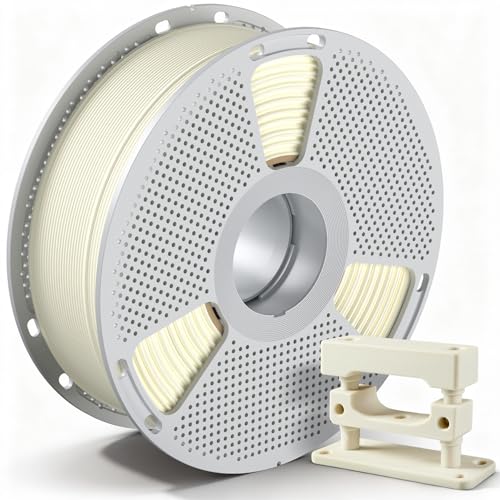
- ①【10% Glass Fiber】 - ABS-GF is an enhanced version of standard ABS, reinforced with 10% glass fiber for superior stability and 30% greater strength. The improved dimensional
- ②【Enhanced Strength & Stiffness】 - ABS-GF outclasses regular ABS in strength and stiffness, establishing it as the superior filament for demanding engineering applications. It is
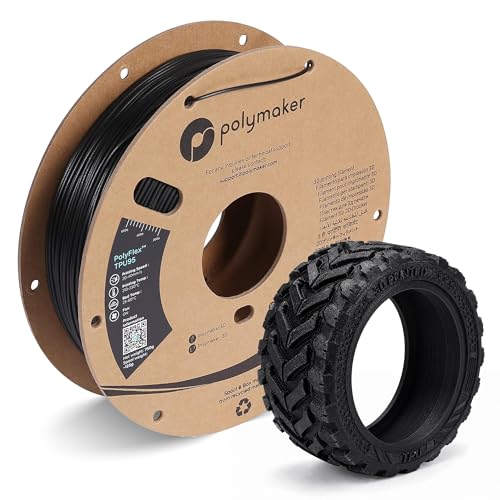
- High-Speed Printing & Enhanced Efficiency – Polymaker High Speed TPU Filament prints up to 3 times faster than ordinary TPU, striking the ideal balance between softness and
- Flexible & Durable Performance – Featuring a Shore hardness of 95A, this TPU filament offers excellent wear resistance, oil resistance, aging resistance, and high elasticity
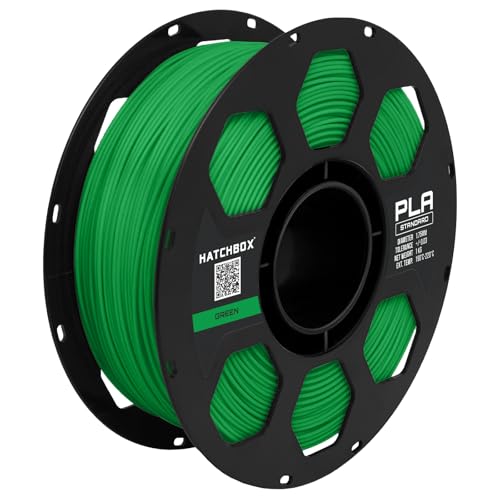
- FILAMENT SPECS: SIZE: 1 kg (approximately 2.20 lbs) Spool, 1.75 mm Filament Diameter (Dimensional Accuracy +/- 0.03 mm), TEMPERATURE: Recommended Extrusion/Nozzle Temp 180°C
- EASY TO USE PLA FILAMENT: Unlock your creativity with our hassle-free PLA Filament! Designed to give you the best 3D printing experience, Hatchbox PLA can conveniently be used on
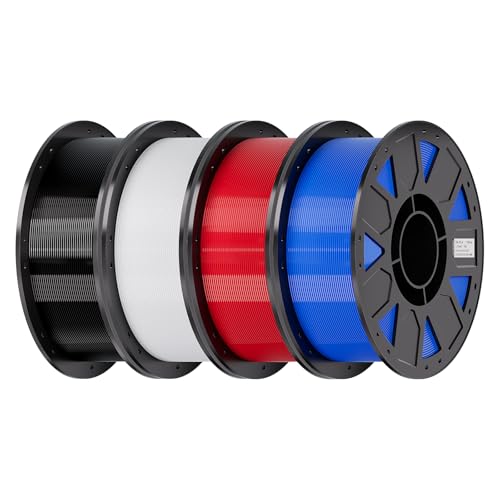
- Ender PETG Filament - combines the advantages of PLA and ABS, offering an eco-friendly, odorless, and user-friendly 3D printing experience. It features enhanced toughness that
- Excellent Mechanical Properties - This PETG filament boasts high strength, impact resistance, and temperature resistance, with low shrinkage and high elongation at break. Printed
The Short Version
The SUNLU ABS-GF is a 1.75mm ABS filament reinforced with 10% glass fiber, sold on a 1KG (2.2lbs) spool in Natural White for $21.84. It targets makers who want stiffer, more dimensionally stable functional parts with a manufacturer-stated 104C heat resistance, rather than the smooth aesthetic prints you would reach for with PLA. The single biggest trade-off: like all glass-fiber composites, it is abrasive to standard brass nozzles and, being an ABS base, it wants an enclosure and good ventilation to print cleanly.
The best sunlu abs-gf 3d review for your situation depends on how you plan to use it and where.
What This Filament Actually Is
ABS-GF stands for acrylonitrile butadiene styrene reinforced with glass fiber. The base polymer here is ABS, a well-known engineering plastic prized for toughness and heat tolerance, and SUNLU adds a 10% glass-fiber loading to stiffen it and improve dimensional stability.
The practical result of that fiber loading is a part that resists bending and holds its shape under load better than plain ABS. SUNLU markets it around three ideas that are baked into the product name itself: superior durability, reliable load-bearing, and 104C heat resistance. Those are the reasons you would pick a reinforced ABS over a standard one.
This particular listing is the Natural White variant on a 1KG spool. It is a 1.75mm diameter filament, which is the most common size for consumer desktop printers.
Why glass fiber changes the print
Glass fiber does two things. It raises stiffness, so finished parts flex less and feel more rigid in the hand, and it reduces warping tendencies compared to unfilled ABS because the fibers restrain shrinkage as the plastic cools. The finish tends to read as matte rather than glossy, which many people prefer for functional hardware because it hides layer lines.
Where a number is not printed in the manufacturer data, we have left it as not stated rather than guessing. For nozzle and bed temperatures in particular, check the printed spool label or the SUNLU product page, because composite ABS often runs hotter than plain ABS and the exact window matters.
Who It's For
Makers printing functional, load-bearing parts
If you are printing brackets, mounts, jigs, tool holders, or enclosure hardware that has to take real mechanical stress, a glass-fiber reinforced ABS is a sensible choice. The added stiffness is exactly what you want in parts that would flex or creep under load if printed in PLA.
People who need heat tolerance
The 104C manufacturer-stated heat resistance puts this well above where PLA gives up. Parts destined for a warm car interior, near a motor, around lighting, or in any environment that gets hot are a natural fit for an ABS-based filament rather than PLA.
Owners of enclosed printers
ABS prints best in a heated, draft-free chamber, so anyone with an enclosed machine already has the setup this filament rewards. If your printer holds chamber heat, the warping that scares people away from ABS becomes much more manageable, and the glass fiber further helps stability.
Builders who want a matte engineering look
Glass-fiber composites tend to produce a flatter, matte surface that hides layer lines. If you value the utilitarian look of tooling and hardware over glossy display models, this is a plus rather than a compromise.
Who Should Skip It
Beginners on an open-frame printer
ABS in general is less forgiving than PLA. It wants an enclosure, a hotter bed, and good adhesion, and it produces fumes that call for ventilation. If you are new and running an open-frame printer in a living space, start with PLA or PETG and come back to reinforced ABS later.
Anyone unwilling to swap to a hardened nozzle
Glass fiber is abrasive. Over time it wears standard brass nozzles, so a hardened steel or similarly wear-resistant nozzle is strongly advisable. If you are not willing to change your nozzle or accept the wear, this is not the filament for you.
People printing display models
If your goal is a glossy, finely detailed figurine or a smooth aesthetic piece, the matte, fiber-filled surface and the general character of ABS are not the ideal tools. A standard PLA will give you crisper cosmetic results with less hassle.
Those needing flexibility
This is a rigid, stiffened material by design. If your part needs to bend, compress, or act as a gasket or grip, a flexible filament is the correct category, not reinforced ABS.
The Honest Trade-Offs
At $21.84 for a 1KG spool, this sits in a normal price band for a specialty engineering filament, so the cost is not the main compromise. The compromises are inherent to the material class.
First, nozzle wear. The 10% glass-fiber loading that gives you stiffness and stability is the same thing that grinds away at a brass nozzle. Budget for a hardened nozzle as part of adopting this filament, and treat that as a real, recurring consideration.
Second, printing difficulty. As an ABS base, it is prone to warping and layer separation without a heated bed, an enclosure, and controlled cooling. It also emits fumes that make ventilation important. None of this is a defect; it is the cost of the heat resistance and toughness you are buying.
Third, unstated print settings. The listing data does not publish a nozzle or bed temperature, so you will need to confirm the recommended window from the spool label or SUNLU's own documentation before your first print rather than assuming it matches plain ABS.
Finally, color and finish. This is the Natural White variant with a matte, functional look. That is great for hardware and poor for glossy display pieces, so match your expectations to the intended use.
What to Check Before You Buy
Confirm the current price and variant
Listings change. Verify that the price still reads near $21.84, that you are selecting the 1.75mm diameter and the 1KG Natural White spool, and that you have not landed on a different color or size variant with a different price.
Verify printer compatibility
Make sure your printer accepts 1.75mm filament, which most desktop machines do. More importantly, confirm your setup can handle ABS: a heated bed, ideally an enclosure, and adequate ventilation. Also plan for a hardened nozzle to cope with the glass fiber.
Confirm the print settings on the label
Because nozzle and bed temperatures are not stated in the listing data, read them off the spool or SUNLU's spec sheet before slicing. Reinforced ABS can run hotter than unfilled ABS, and getting the temperature right is the difference between strong parts and delamination.
Check warranty, seller and moisture packaging
Confirm who the seller and shipper are on the listing, whether any return or warranty terms are stated, and whether the spool ships sealed with desiccant. Filament absorbs moisture, and a vacuum-sealed spool prints more reliably out of the box.
Read the current owner feedback yourself
This particular listing does not yet have enough ratings to summarize, so do not rely on a star average. Check the Amazon reviews and questions yourself at the time of purchase for the most current, real-world feedback on this exact spool.
Consider Instead If...
You need flexibility, not stiffness. The Polymaker PolyFlex TPU95 (Shore 95A, 0.75kg, $24.99) is a flexible TPU for gaskets, grips and parts that must bend, which is the opposite use case to reinforced ABS.
You want an easy, beginner-friendly print. The HATCHBOX Green PLA (1KG, $21.99) is far more forgiving on an open-frame printer and better for cosmetic models, though it lacks the heat resistance of ABS.
You want a tougher everyday material without ABS fumes and a big spool. The Creality Ender PETG 4KG multipack ($41.14) offers strong, odorless PETG in bulk across several colors, a middle ground between PLA ease and ABS heat tolerance.
Frequently Asked Questions
Do I need a hardened nozzle for SUNLU ABS-GF?
It is strongly advisable. The 10% glass-fiber content is abrasive and will wear a standard brass nozzle over time, so a hardened steel or wear-resistant nozzle is the safer choice for repeated use.
What temperature does it print at?
SUNLU does not publish the nozzle and bed temperatures in this listing data, so check the printed spool label or the manufacturer's spec sheet before printing. Being a reinforced ABS, expect it to sit in the ABS range and possibly run a little hotter.
How heat resistant is it?
The manufacturer states 104C heat resistance, which is well above PLA and suitable for parts exposed to warm environments such as near motors, lighting, or in a hot car interior.
Can I print this on an open-frame printer without an enclosure?
It is not recommended. ABS-based filaments warp and delaminate without a heated bed and, ideally, an enclosure that holds chamber heat. You also want good ventilation because ABS produces fumes.
Is glass-fiber ABS stronger than regular ABS?
The glass fiber increases stiffness and dimensional stability, which is why SUNLU markets it for durability and load-bearing parts. It resists flexing better than unfilled ABS, though it is a rigid material and not meant to bend.
What size and color is this spool?
This listing is 1.75mm diameter, a 1KG (2.2lbs) spool, in Natural White. Confirm you are selecting that exact variant on Amazon, as other options may carry different prices.
What can I print with it?
It suits functional hardware such as brackets, mounts, jigs, tool holders, and enclosure parts where stiffness and heat tolerance matter more than a glossy finish. It is not the ideal pick for detailed display models.
The Bottom Line
The SUNLU ABS-GF is a focused, functional filament: a 10% glass-fiber reinforced ABS aimed at stiff, heat-tolerant, load-bearing parts rather than pretty display pieces. If you have an enclosed printer, are ready to fit a hardened nozzle, and want the 104C heat resistance and added rigidity, it is a reasonable $21.84 spool to try. If you are a beginner on an open-frame machine or you want easy cosmetic prints, one of the alternatives above will serve you better.
For general background on the base polymer and its properties, see the ABS plastic overview on Wikipedia.
Key Takeaways
- Choosing the right sunlu abs-gf 3d review means matching the key features to your specific needs and budget
- Read real customer reviews and check the return policy before you commit
- Also covers: glass fiber abs filament
- Also covers: sunlu abs-gf 1.75mm
- Also covers: reinforced abs 3d printing
- Compare value across models — the priciest option is not always the best fit